

Best Ford SUVs For Large Families

Vehicles for Large Families: Balance Space, Comfort, and Safety
The Ford Expedition and Ford Explorer are top contenders for the best large Ford family SUVs if you seek a reliable and spacious ride. These vehicles offer ample cargo space, comfortable seating, and cutting-edge safety features, making them perfect for family adventures. Ford’s commitment to reliability, durability, and fuel efficiency provides a smooth and enjoyable ride for the entire family. Ready to find the perfect Ford family-size SUV tailor-made for your crew? Keep reading and head to Preston Ford of Aberdeen to learn more!

Overview of Large Ford SUVs
Ford SUVs are the perfect blend of power, space, and safety for modern families. The full-size Ford Expedition offers a cavernous interior, ideal for hauling the entire clan and all their gear. The midsize Ford Explorer perfectly balances cargo capacity and fuel efficiency for a more balanced approach. No matter your family’s needs, the Blue Oval brand has the best Ford SUV for large families to fit the bill.

Ford Expedition: Best Ford SUV for Family of 8
The Ford Expedition is a full-size SUV designed for families with big needs. With seating for up to eight also making it the best Ford SUV for a family of 8. With a massive cargo area, it can accommodate everyone and everything. From road trips to family vacations, the Ford Expedition offers ample space and comfort for every passenger. The Ford Expedition is a full-size SUV made for families with big needs. With seating for up to eight and a massive cargo area, it can accommodate everyone and everything. The Ford Expedition offers ample space and comfort from road trips to family vacations. The standard Ford Expedition boasts a cavernous cargo area of up to 104.6 cu.ft. with the seats folded down. For those needing even more space, the Ford Expedition MAX offers an additional 19.9 cu.ft. of cargo capacity, bringing the total to 121.5 cu.ft. Whether you choose the standard Ford Expedition or the larger Ford Expedition MAX, you’ll have plenty of room for passengers, luggage, and gear.
Ford Explorer: Best Ford SUV for Family of 7
The Ford Explorer is a versatile midsize SUV that offers a perfect balance of space and efficiency. With seating for up to seven passengers, it can comfortably accommodate growing families, and it’s also the best Ford SUV for a family of 6. The Ford Explorer’s generous cargo area, which expands significantly with the rear seats folded down, makes it ideal for hauling luggage, gear, or even larger items. The available PowerFold® third-row seat allows you to easily adjust the cargo space with just a button press, providing up to 85.8 cu.ft. of room when fully utilized. Whether you’re embarking on a family road trip or running errands around town, the Ford Explorer is a practical and stylish choice.
Safety and Reliability: What Makes a Ford SUV Safe?
Ford SUVs are designed with safety as a top priority. The available Ford Co-Pilot360® suite provides advanced driver-assistance features like Automatic Emergency Braking, Lane-Keeping Assist, and Blind-Spot Monitoring to help keep you and your loved ones safe. The Ford Expedition and Ford Explorer have earned the prestigious Top Safety Pick award from the IIHS, further solidifying their reputation for safety and reliability.

Reliability and Durability
Ford SUVs are built to last, with many owners reporting high mileage without major issues. Models like the Ford Expedition and Ford Explorer are particularly renowned for their reliability and durability, making them top tier choices for families wanting a dependable SUV that can withstand the test of time.
Factors to Consider
When selecting a Ford SUV, consider factors such as seating capacity, cargo space, fuel efficiency, and safety features. By aligning your choice with your family’s unique lifestyle and needs, you can find the best large Ford SUV for your family to elevate your everyday adventures.
Choosing the Right Ford SUV for Your Family
Deciding between the Ford Expedition and Ford Explorer is a common dilemma for large families. Both offer spacious interiors and advanced features making them the top choices for the best Ford SUVs for large families. To make the best choice, compare their seating capacity, cargo space, and available features. For small families or those seeking a more compact SUV, the Ford Escape or Ford Bronco Sport are excellent alternatives, offering a blend of efficiency, style, and capability. Ready to find the perfect Ford fit for your family? Head to Preston Ford of Aberdeen to browse our SUVs today!
What Is Ford’s Safest Family SUV in 2024?

Built for Safety
When it comes to finding the perfect family SUV, safety is always a top priority. Ford understands the importance of peace of mind on the road, which is why their family SUVs come packaged with a variety of advanced safety features designed to protect you and your loved ones. From Automatic Emergency Braking to rear parking sensors and Cross Traffic Alert, Ford’s safest family SUVs are built with cutting-edge technology that enhances driver awareness and prevents accidents. With features like Forward Collision Warning, Automatic High Beams, and a Blind Spot Information System, Ford ensures that every journey is as safe as it is enjoyable. Ready to discover Ford’s safest family SUV? Keep reading and visit Preston Ford of Aberdeen to explore our lineup!
Ford Explorer: A Leader in Safety
The 2024 Ford Explorer stands out as one of Ford’s safest SUVs for families, earning the prestigious 2024 Top Safety Pick+ award from the Insurance Institute for Highway Safety (IIHS). It even received a five-star overall rating from the National Highway Traffic Safety Administration (NHTSA). This remarkable vehicle comes equipped with a suite of advanced safety features, all as standard, to ensure peace of mind on the road. These safety features include Forward-Collision Warning with Automatic Emergency Braking, Blind-Spot Monitoring, Rear-Cross-Traffic alert, Lane-Departure Warning, and Lane-Keeping Assist. With these cutting-edge technologies, the Ford Explorer offers unparalleled protection for you and your family and is widely regarded as Ford’s safest SUV for families.
Ford Escape: A Close Second
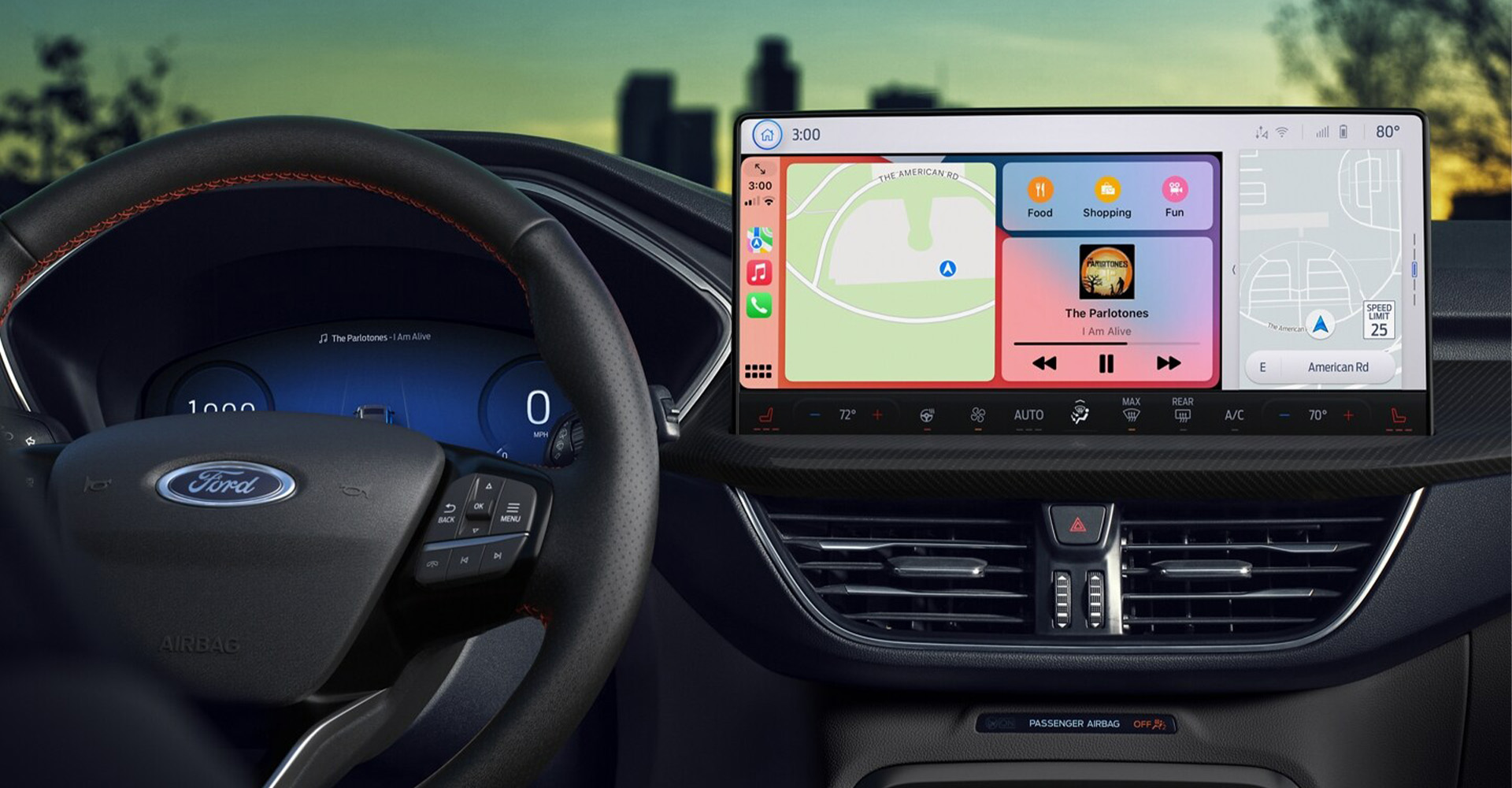
The Ford Escape is another stellar vehicle recognized as one of Ford’s safest SUVs for families. Recent model years have earned strong safety ratings from the Insurance Institute for Highway Safety (IIHS) in addition to a high five-star overall score from the National Highway Traffic Safety Administration (NHTSA). This compact SUV offers a solid array of standard driver-assistance features, including lane-keep assist and rear cross-traffic alert, helping drivers stay aware of their surroundings and avoid potential hazards. With its impressive safety credentials and thoughtful technology, the Ford Escape delivers both confidence and peace of mind on every journey.
Ford Expedition: Ford’s Safest 3rd-Row Family SUV
The Ford Expedition is always a top choice for families seeking a safe and spacious 3rd-row SUV. With its robust construction, advanced safety features, and impressive crash test ratings, the Ford Expedition prioritizes the well-being of every passenger. From its sturdy frame to its comprehensive airbag system, the Ford Expedition is engineered to protect in the event of an accident. Additionally, its suite of driver-assistance technologies, including Blind-Spot Monitoring and Automatic Emergency Braking, helps drivers stay alert and avoid potential hazards. When it comes to family safety, the Ford Expedition sets a high standard.
Ford Co-Pilot360® Technology: Key Safety Features for Families
Ford Co-Pilot360® offers a range of safety features to enhance your driving experience and protect those around you. Pre-Collision Assist with Automatic Emergency Braking (AEB) detects any potential collisions with vehicles or pedestrians, automatically applying the brakes if an impact is imminent. Pedestrian Automatic Emergency Braking further protects pedestrians by stopping the vehicle if necessary. The Blind Spot Information System (BLIS®) with Cross-Traffic Alert lets you know of vehicles in your blind spot and approaching traffic when reversing. The Lane-Keeping System provides steering assistance and alerts if you drift out of your lane. Adaptive Cruise Control with Stop-and-Go maintains speed and distance, even stopping the vehicle in traffic. A Rear View Camera ensures you can safely reverse, while Automatic High-Beam Headlamps adjust your lights for optimal visibility. Together, these features create a comprehensive safety suite to keep you secure on the road.

Why Choose a Ford SUV?
Choosing a Ford SUV means choosing a vehicle with a proven track record of safety excellence. Ford has consistently prioritized the well-being of drivers and passengers, ensuring that their SUVs are equipped with advanced safety features across all trim levels. Even the base models come loaded with essential safety technologies, like Lane-Keeping Assist and Rear Cross-Traffic Alert, offering peace of mind from the start. For those seeking even more protection, higher trims provide additional advanced features, such as Adaptive Cruise Control and Automated Emergency Braking. Whether you’re seeking a family-friendly SUV or one packed with top-tier safety innovations, Ford has you and your family covered.
Safe Driving Tips
Safe driving is paramount for protecting yourself and others on the road. To drive defensively, always remember to wear your seatbelt, as it’s one of the simplest and most effective ways to stay safe. Ensuring a safe following distance from other vehicles allows you to react quickly in case of sudden stops or emergencies. Be sure to avoid distractions, such as texting or fiddling with the radio, to stay focused on the road. Lastly, stay alert of your surroundings at all times and remember to be mindful of other drivers, pedestrians, and potential hazards. These handy road tips can help prevent accidents and keep you and your family safe on each adventure.
Gain Peace of Mind on the Road
Ford’s commitment to safety is evident in its lineup of Ford’s safest family SUVs. With advanced safety features and top-notch safety ratings, these vehicles provide peace of mind for drivers and passengers alike. By selecting a Ford SUV, you can confidently embark on your journeys, knowing that your family’s safety is a priority. Head to Preston Ford of Aberdeen to discover Ford’s safest family SUV for you and your loved ones!
What Are The Best Ford SUVs For Moms?

Comfort and Convenience for All Family Adventures
When it comes to finding the perfect Ford SUV for moms, several key features stand out that can make daily life a little easier. A great choice should prioritize ample cargo space, comfortable seating, and an array of safety features such as Blind Spot Monitoring, Lane Departure Warning, and Automatic Emergency Braking. For small families or city dwellers, the Ford Escape provides a compact yet spacious option, while the Ford Explorer is ideal for growing families needing a bit more room. For those with larger families or frequent road trips in mind, the Ford Expedition is the ultimate choice. Moms should also consider practical features that accommodate car seats, passengers, and storage for strollers, sports equipment, and groceries. With their good fuel economy, smooth rides, and comfortable interiors, Ford SUVs make an excellent choice for busy families navigating their daily adventures. Ready to explore the best Ford SUVs for moms? Keep reading to learn our top picks, and head to Preston Ford of Aberdeen!

Choosing the Right Fit for Your Family
Deciding on the right SUV for your family can feel overwhelming with so many options available. However, by focusing on a few key factors, you can find the perfect match for your needs. Start by considering the size of your family and the number of passengers you need to accommodate. For larger families or those frequently transporting multiple car seats, a three-row SUV like the Ford Expedition offers ample space and flexibility. If your family is smaller or you prefer a more compact vehicle, the Ford Escape provides a cozy yet spacious option.
Next, think about your family’s lifestyle and activities. If road trips and outdoor adventures are your thing, an SUV with ample cargo space and advanced safety features is a must. The Ford Explorer, with its generous cargo space and cutting-edge safety features, is perfect for families on the go. Additionally, if you live in an area with harsh weather conditions, consider an SUV with four-wheel or all-wheel drive capability to ensure a safe and smooth ride.
Finally, consider your budget and the overall value of the SUV. While luxurious features are tempting, it’s essential to think about long-term costs, including fuel efficiency, maintenance, and repairs. Ford SUVs are known for their excellent fuel efficiency, making them a smart investment for families looking to save on gas over time.
Best Mom SUV With A 3rd Row: Ford Expedition
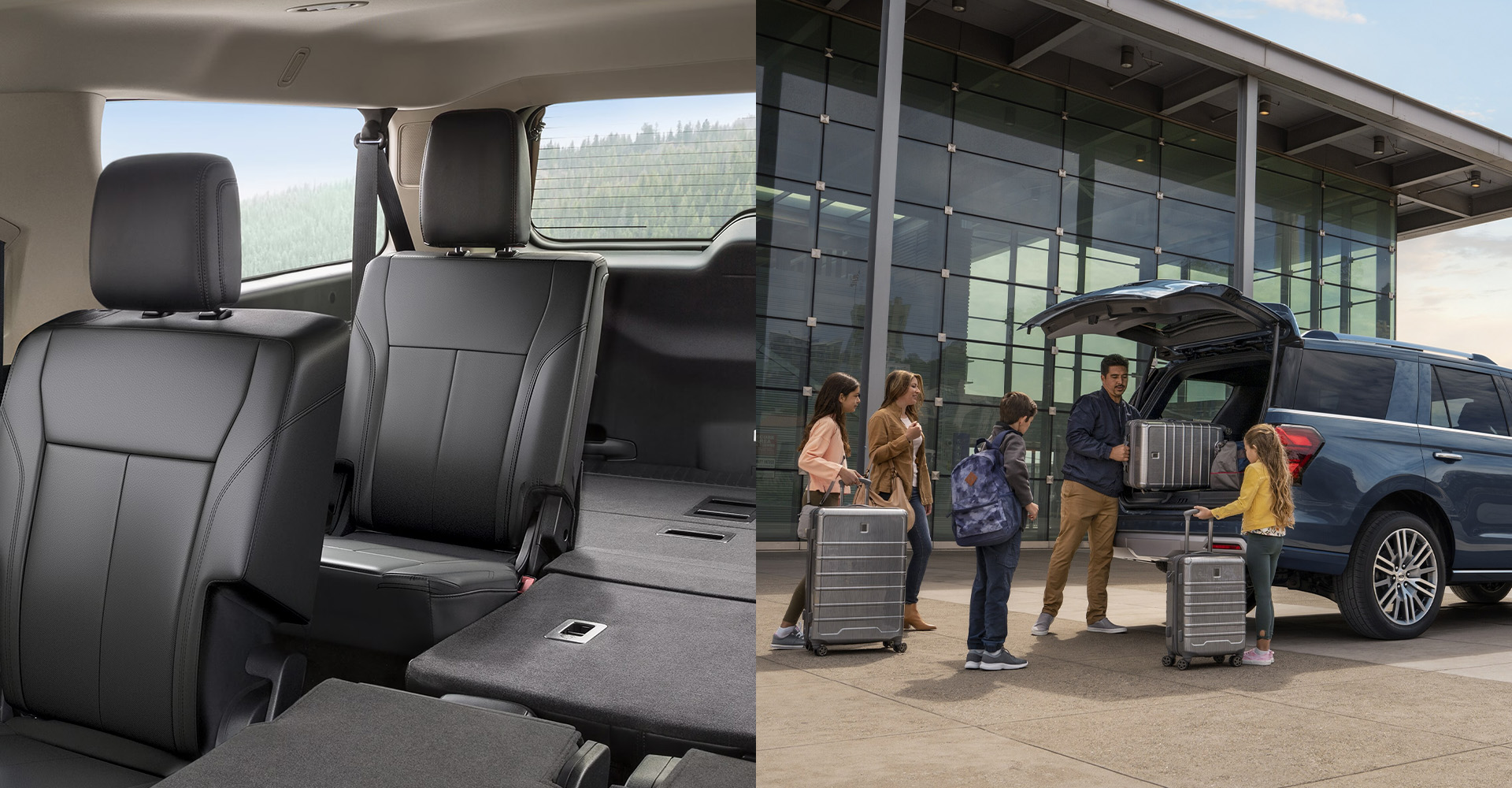
One standout feature of the Ford Expedition that makes it one of the best Ford SUVs for moms is its available third-row power-reclining seats. This thoughtful design allows the SUV to comfortably accommodate up to eight family members, making it perfect for larger families or carpooling with friends. Additionally, the available second-row tip-and-slide seats enhance accessibility and legroom, ensuring that everyone can settle in comfortably, even on longer trips. This combination of spacious seating and flexibility is what truly elevates the Ford Expedition as the best SUV for moms who need to account for all family members with comfort and convenience.
Best Ford SUVs for New Moms: Ford Escape
Seeking the best SUV for a first-time mom? We’ve got the perfect pick when you’re looking to find the best SUV for your baby. New mothers have a lot on their plates and they need a sturdy SUV they can depend on. The Ford Escape is an ideal choice for new moms, offering features that emphasize convenience and safety. The second-row sliding seats with a 60/40 split-fold design provide flexibility for both passengers and cargo, making it easy to manage everything from diaper bags to groceries. Ford Co-Pilot360® technology enhances safety with Automatic Emergency Braking and Blind-Spot Monitoring, giving new parents peace of mind. Being a new mom also means your hands are likely always full. With the Power Liftgate, you just have to press a button, and the rear hatch goes up, removing all the hassle of transporting your cargo.
Most Versatile Ford SUV for Moms: Ford Explorer
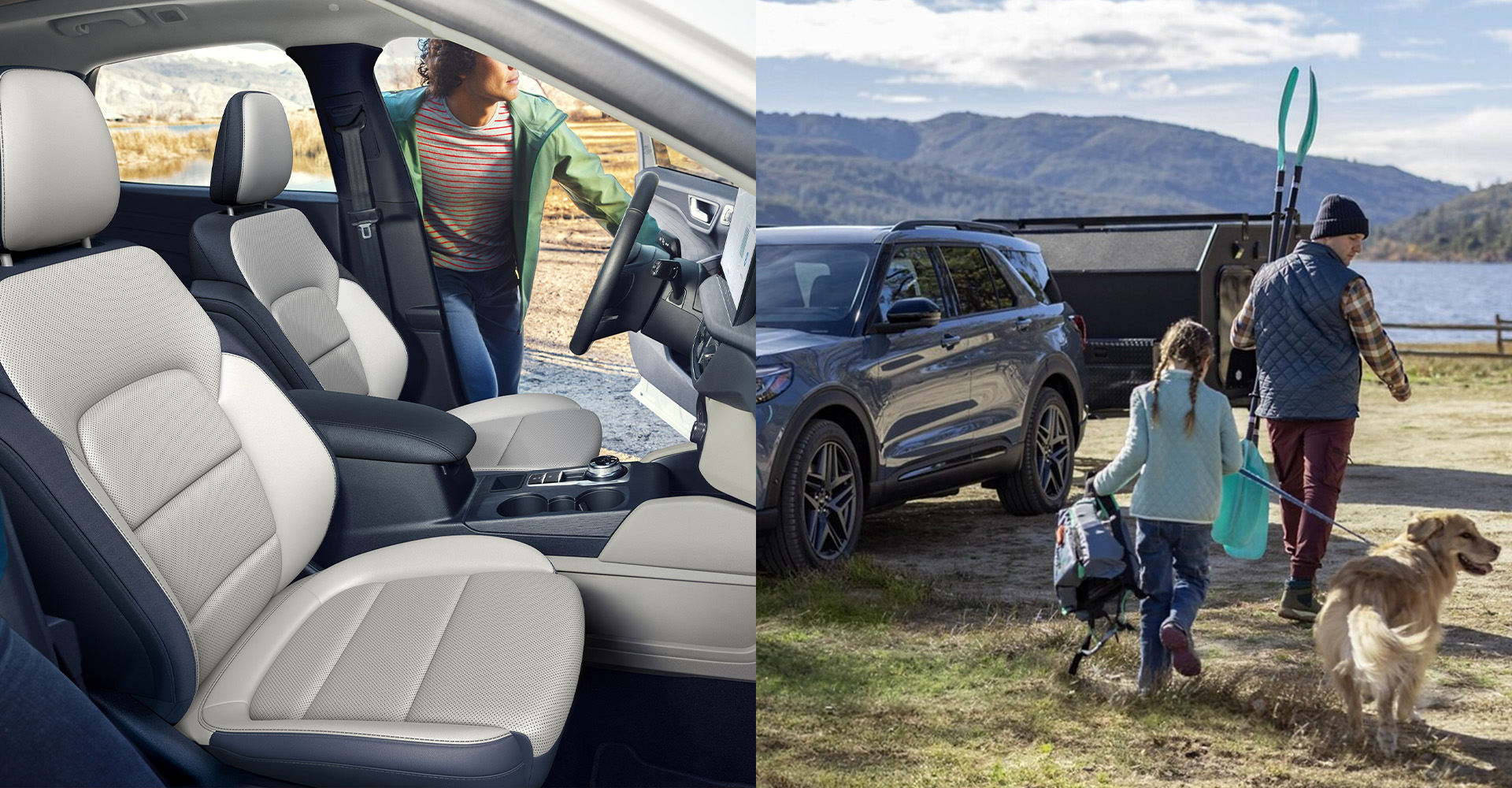
Did you know that the Ford Explorer is the best-selling SUV in America?* After taking it for a test drive and exploring this SUV further, you’ll immediately see why it is a fan favorite amongst the masses. The Ford Explorer stands out as the most versatile SUV for moms, combining practicality with cutting-edge features. With available PowerFold® third-row seating, accommodating extra passengers or cargo is a breeze—simply fold the seats down at the push of a button to unlock an impressive 85.3 cu.ft. of cargo space. This adaptability is complemented by the durable ActiveX® seating material, designed to withstand the rigors of family life. Modern conveniences, like the Remote Start System and a standard 13.2-inch touchscreen paired with a 12.3-inch digital cluster, enhance your driving experience while keeping the family connected on the go. Plus, with a built-in 5G LTE Wi-Fi® hotspot, kids can stay entertained on the go. With seating for up to seven, the Ford Explorer effortlessly transitions from school drop-offs to weekend adventures, making it an ideal choice for busy moms seeking flexibility without sacrificing style.
Safety Features to Consider
When selecting the best Ford SUV for moms, safety should be at the forefront of your decision-making process. Here are some essential safety features to look for:
Advanced Airbags: Ensure the SUV is equipped with multiple airbags, including front, side, and curtain airbags, to provide comprehensive protection in the event of a collision.
Electronic Stability Control: This feature helps maintain vehicle stability, especially in adverse weather conditions, by automatically adjusting braking and engine power.
Anti-lock Braking System (ABS): ABS prevents the wheels from locking up during hard braking, reducing the risk of skidding and maintaining steering control.
Lane Departure Warning and Lane-Keeping Assist: These features alert you if the SUV drifts out of its lane and can make minor steering adjustments to keep you on course.
Blind-Spot Monitoring: This system alerts you to vehicles in your blind spots, enhancing safety during lane changes.
Rearview Camera: A rearview camera provides a clear view of the area behind the SUV, making parking and maneuvering in tight spaces much easier.
Comfort and Convenience Features
While safety is paramount, comfort and convenience features can significantly enhance your travels as a mom on the go. Here are some features to consider when choosing the best pick of our 2025 Ford SUVs for moms:
Heated and Ventilated Seats: These seats provide comfort and relaxation, especially on long road trips, by keeping you warm in the winter and cool in the summer.
Infotainment System: A user-friendly infotainment system with Bluetooth connectivity, USB ports, and a touchscreen display can keep everyone entertained and connected.
Ample Cargo Space: The best Ford SUVs come with generous cargo space to accommodate sports equipment, luggage, and other family gear, making it easier to transport everything you need.
Cupholders and Storage Compartments: Convenient storage compartments and cupholders help keep your family’s belongings organized and within reach.
Adaptive Cruise Control: This feature reduces driver fatigue on long trips by automatically adjusting speed and maintaining a safe following distance.
A New Addition to the Family
Ready to find the best Ford SUVs for moms? Explore the perfect Ford SUV that will enhance your family life and make your daily routines feel effortless. View the entire Ford SUV lineup at Preston Ford of Aberdeen today!
*Based on S&P Global Mobility 1946-current U.S. Total New Cumulative Registrations, for all vehicles identified as SUVs.
Ford SUVs With The Most Cargo Space

Find the Ford SUV with the Most Cargo Space: Your Top Options
Cargo capacity is a crucial factor to consider when purchasing a Ford SUV. It essentially refers to the amount of space available within the vehicle to transport luggage, gear, or other items. For families or individuals who frequently need to haul large items, having ample cargo capacity is essential. Whether you’re planning a road trip, moving, or simply need to transport bulky items for everyday life, a practical Ford SUV with sufficient cargo space can make a significant difference in your overall convenience and functionality. Let’s get into the logistics and discover the Ford SUV with the most cargo space. After that, head to Preston Ford of Aberdeen to compare each SUV in person!
Rear Seats and Cargo Space
The design and configuration of rear seats significantly influence a vehicle’s cargo capacity. In most Ford SUVs, rear seats can be folded down to create additional cargo space, transforming your vehicle into a versatile hauler. The type of rear seats—whether they are bench seats or captain’s chairs—also plays a role. Bench seats typically offer a flat, continuous surface when folded, maximizing cargo space. On the other hand, captain’s chairs might provide more comfort for passengers but can slightly reduce the available cargo area. Some SUVs come with sliding or reclining rear seats, allowing you to adjust the space according to your needs. These features can be particularly useful when you need to balance passenger comfort with cargo capacity.

SUVs With Large Cargo Space
Ford Expedition
Another one of the largest Ford SUVs with the most cargo space in the lineup is the Ford Expedition. With its cavernous interior and flexible seating arrangements, the Ford Expedition offers an incredible amount of storage space. Whether you need to haul large furniture, camping gear, or even a small boat, the Ford Expedition has you covered. The Ford Expedition offers a massive cargo area, measuring up to 104.6 cu.ft. when you fold down the second and third-row seats. Need even more storage? The Ford Expedition can tow up to a maximum of 9,300 lbs. when equipped with the available Heavy-Duty Trailer Towing Package, perfect for maximizing cargo capacity with a trailer.
Ford Expedition MAX
Need to level up your space even more? This Ford SUV with the most cargo space takes the crown and gives you the most room out of any Ford SUV. The Ford Expedition MAX offers a significant increase in size and cargo capacity compared to the standard Ford Expedition. It’s nearly a foot longer, providing an extra 19.9 cu.ft. of interior cargo space. This added length expands the maximum cargo area to a generous 121.5 cu.ft. If extra space is a priority, the Ford Expedition MAX might be the ideal choice for you.

Midsize SUVs With Largest Cargo Space
Ford Explorer
If you’re looking for a midsize SUV with plenty of room for your belongings, the Ford Explorer is an excellent choice and is one of the best Ford SUVs with the most cargo space. The Ford Explorer offers a generous cargo area that can be further expanded by folding down the rear seats. This makes it a versatile option for families and individuals who need a spacious vehicle for both passengers and cargo. The available PowerFold® third-row seat allows you to expand the Ford Explorer’s cargo area with the simple press of a button. With both the second and third rows folded down, you’ll have a massive 85.8 cu.ft. of cargo space.
Ford Edge
Another midsize Ford SUV with the most cargo space is the Ford Edge. Behind the first row of seats, the Ford Edge offers a generous 73.4 cu.ft. of storage space. Even with the second row in place, you’ll still have a respectable 39.2 cu.ft. of cargo room. This makes the Ford Edge a versatile option for those who need a midsize SUV with ample space for both passengers and belongings. Second Row 60/40 Split-Fold-Flat and a Reclining Bench with a Fold-Down Armrest make cargo space even easier to configure to your liking.
Small SUV With Most Cargo Space
Ford Escape
Looking for a compact Ford SUV with the most cargo space? The Ford Escape’s cargo area measures up to 65.4 cu.ft. behind the first row, providing ample room for your belongings. For those who need even more space, the available 2.0L EcoBoost® engine and Class II Trailer Tow Package allow you to tow a trailer weighing up to 3,500 lbs. on your Ford Escape.
Choosing the Right Ford SUV for You
Choosing the right Ford SUV for your needs and preferences involves careful consideration. Think about the number of passengers you’ll regularly transport and the amount of cargo space required. Consider the activities you’ll be using the SUV for, such as road trips, off-road adventures, or daily commuting. By researching and comparing different Ford SUV models, you can find the perfect vehicle that aligns with your specific needs and lifestyle.
Find your Ford SUV Today
The best way to compare all of the Ford SUVs with the most cargo space is by heading to Preston Ford of Aberdeen for a test drive. By viewing each SUV interior up close and in person, you’ll be able to make an informed decision and choose the best Ford SUV to suit your needs. See you soon!
Which Is The Best Ford SUV For Road Trips?

Choosing the Right Ford for Your Next Road Trip
When planning a family road trip, one of the most important decisions you’ll need to make is choosing the right vehicle. A reliable and comfortable SUV can make the journey much more enjoyable for everyone involved. If you’re considering a Ford SUV, you’ve come to the right place. In this blog post, we’ll explore options and find the best Ford SUV for family road trips. Follow along to see our picks, and head to Preston Ford of Aberdeen to view each SUV in person!
What to Consider When Choosing a Ford SUV
Before you start your search, it’s important to consider your family’s specific needs. Here are some factors to keep in mind when selecting the best Ford SUV for your family road trip:
Size: How many passengers will you be transporting? Do you need a lot of cargo space for luggage, gear, or pets?
Budget: What is your price range for a new or used SUV?
Features: What features are most important to you, such as safety technology, fuel efficiency, or entertainment options?
Best Ford SUV for Travel: Ford Explorer
For families who need a versatile SUV that can tackle any family road trip, the Ford Explorer is a great option. This SUV offers a spacious interior and sufficient cargo space, making it perfect for families of all sizes. The Ford Explorer also features advanced safety features and a variety of engines to choose from, making it one of the best Ford SUVs for road trips. It offers luxury and convenience with available features like multi-contour seats with Active Motion® massage technology, a large 13.2-inch touchscreen with SYNC® 3 for customization and connectivity, and a premium B&O® Sound System with 14 speakers to play your favorite playlists.
Most Comfortable SUV for Long Trips: Ford Expedition
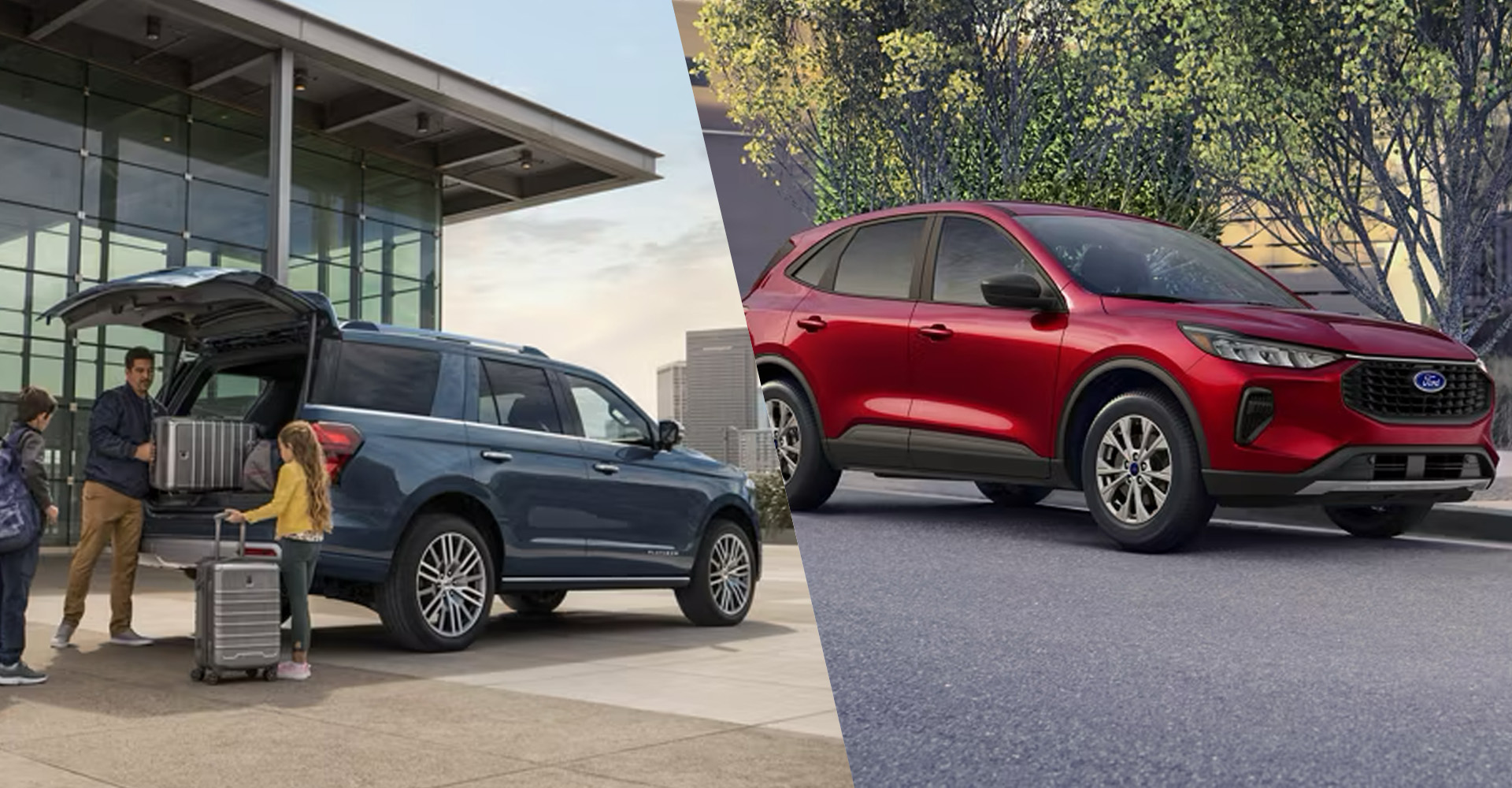
If you have a large family or need plenty of cargo space, the Ford Expedition is an excellent and comfortable choice on our list of the best Fords for family road trips. This full-size SUV offers a spacious interior with room for up to eight passengers and ample cargo space. It provides cozy seating for up to eight passengers and has a maximum cargo capacity of 104.6 cu.ft. when the second and third-row seats are folded, ensuring plenty of room. There are a variety of advanced safety features to keep you safe and comfortable for the many miles ahead, including Ford Co-Pilot360® technologies like Adaptive Cruise Control, Blind Spot Monitoring with Rear Cross-Traffic Alert, a rear view camera, and more.
Best SUV for Long Distance Driving: Ford Escape
Need to go far with the best Ford SUV for family road trips? Look no further than the Ford Escape and its hybrid companion. The 2025 Ford Escape offers impressive fuel efficiency, with an EPA-estimated 26 City MPG, 32 Highway MPG, and a Combined 28 MPG on all-wheel-drive models. The 2.5L Hybrid Engine option offers an EPA-estimated 42 City MPG and 36 Highway MPG. This sleek SUV combines exceptional efficiency with reliable power and sporty handling, making it the perfect SUV for your daily commute in addition to weekend adventures with your family.
Best SUV for Outdoor Family: Ford Bronco
The Ford Bronco is the ultimate Ford SUV for family road trips and for rugged outdoor adventures. Its High-Performance Off-Road Stability Suspension (HOSS) system and trim-specific selectable G.O.A.T. Modes™ provide exceptional traction, stability, and water-fording capability. With its impressive ground clearance and rugged construction, the Ford Bronco can confidently tackle any terrain, from muddy trails to rocky outcrops. Available selectable driving modes like Normal, Eco, Sport, Slippery, Sand/Snow, Mud/Ruts, Rock Crawl, Baja, Tow-Haul, and Off-Road allow you to tailor your performance to match the specific conditions of each road (or off-road) adventure. Its spacious interior features comfortable seating for up to five passengers, including a six-way manual driver’s seat and a six-way manual passenger seat. With a generous passenger volume of 103.7 cu.ft., the Ford Bronco offers plenty of room for your adventures.
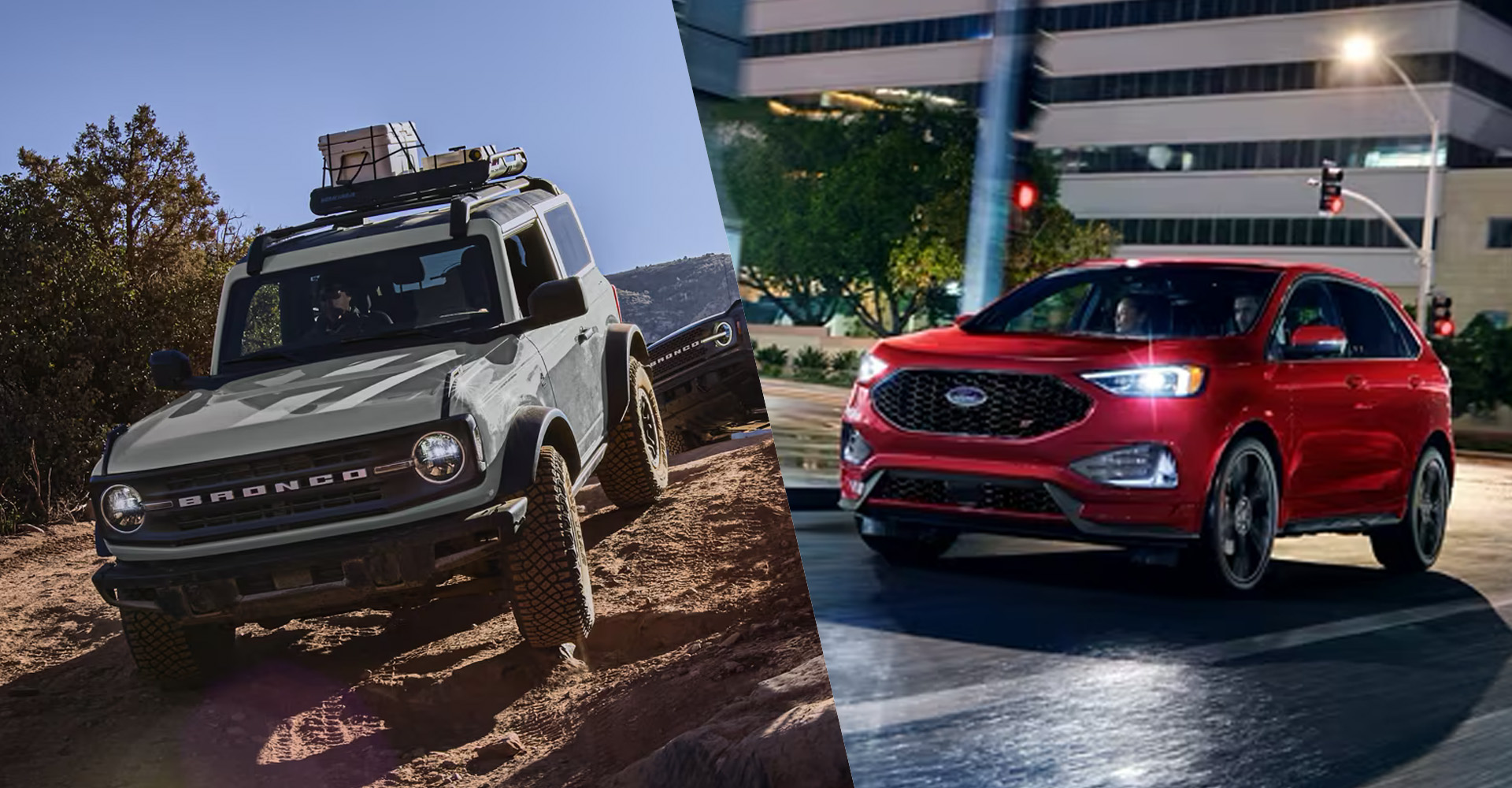
Best Ford Compact SUV for Small Families: Ford Edge
Although the Ford Edge is compact, its capabilities are mighty, earning it a well-deserved spot among the best Ford SUVs for family road trips. The standard 2.0L EcoBoost® engine offers 250 horsepower and 280 lb.-ft. of torque, while the available 2.7L V6 EcoBoost® engine boasts an impressive 335 horsepower and 380 lb.-ft. of torque. Both engines are paired with automatic transmissions for smooth and responsive shifting. The 2024 Ford Edge also boasts impressive fuel economy, with EPA-estimated ratings of up to 21 City MPG and 28 Highway MPG for the 2.0L engine. With an available maximum towing capacity of up to 3,500 lbs., the 2024 Ford Edge is ready to handle your toughest tasks, whether it’s hauling your boat to the lake or towing your camper for a weekend getaway.
Plan Your Next Road Trip
When selecting the best Ford SUV for your family road trips, it’s essential to consider factors such as size, budget, features, and your specific needs. With a wide range of options available, Ford offers SUVs to suit all preferences. Whether you’re seeking a spacious and luxurious option like the Ford Explorer or Ford Expedition, a fuel-efficient choice like the Ford Escape, or a rugged and capable vehicle like the Ford Bronco, Ford has the perfect SUV to make your road trip memorable. Visit Preston Ford of Aberdeen today to explore these exceptional vehicles and find the one that best fits your upcoming road adventures!
Ford F-150 Hybrid Truck

Does Ford Make a Hybrid Ford F-150? What You Need to Know
The Ford F-150 has long been a symbol of American strength and versatility. Now, with the introduction of the Ford F-150 hybrid truck, this iconic vessel from the Blue Oval Brand is taking performance to new heights. Combining the power of a traditional gas engine with the efficiency of an electric motor, the Ford F-150 hybrid truck offers an unparalleled driving experience that’s perfect for both work and play. Let’s take a closer look at what makes the Ford F-150 hybrid truck a force to be reckoned with. Then, head to Preston Ford of Aberdeen to get behind the wheel for a test drive!
Performance and Power: Inside the F-150 PowerBoost® Hybrid Engine
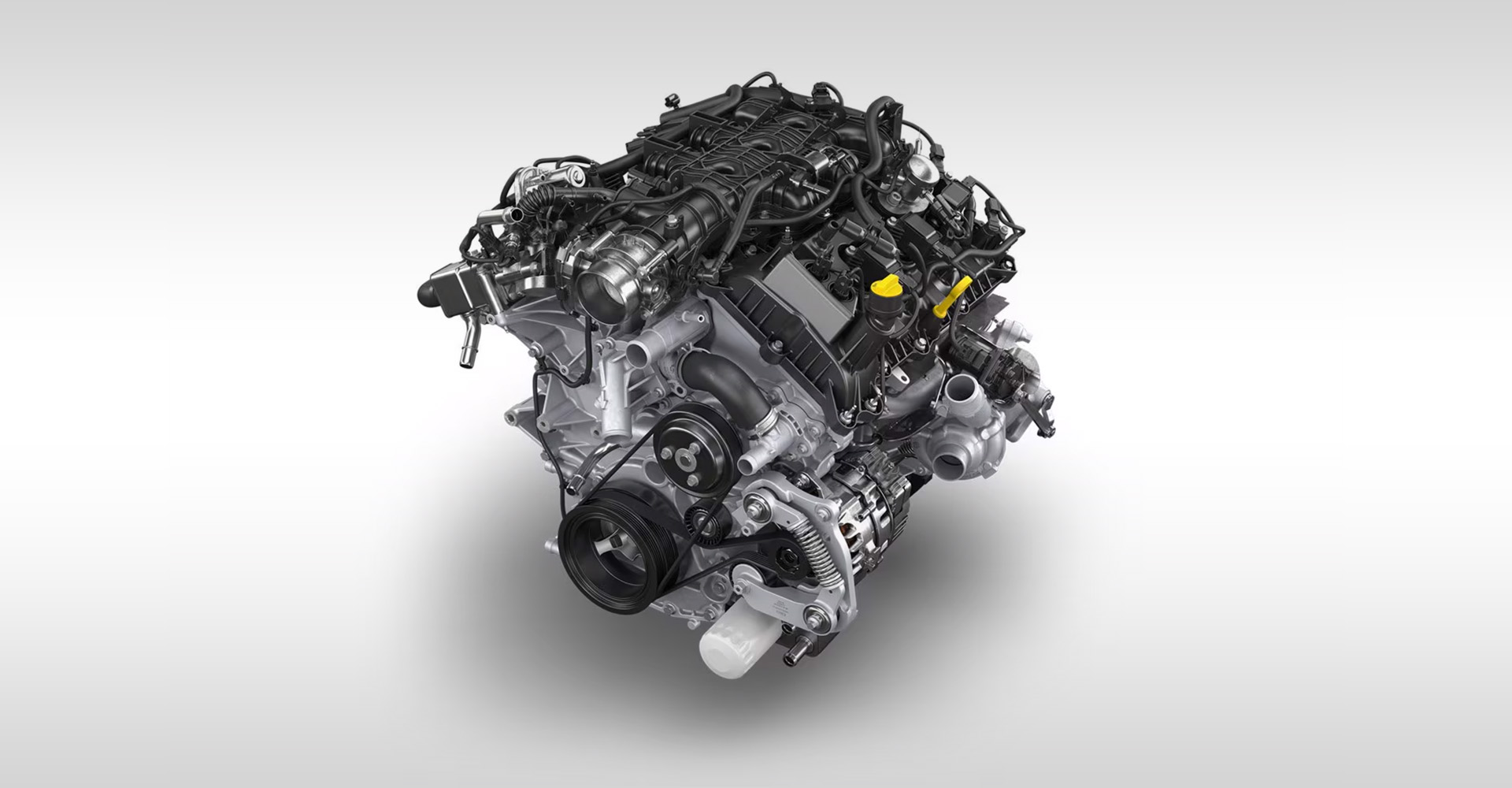
At the heart of each Ford F-150 hybrid truck is the 3.5L PowerBoost® Hybrid V6 engine. This innovative hybrid powertrain combines a 3.5L twin-turbo V6 engine, a 35 kW electric motor, and a Hybrid Electronic 10-speed Automatic Transmission. The result? A staggering 430 horsepower and an unbelievable 570 lb.-ft. of torque, making the Ford F-150 hybrid truck one of the most powerful trucks on the market. The electric motor not only provides additional power but also enhances efficiency.
Capability and Towing
The Ford F-150 hybrid truck’s impressive powertrain translates to exceptional capability. With a maximum towing capacity of 11,200 lbs. when properly configured, it’s ideal for towing large trailers, boats, and other heavy equipment. A best-in-class payload capacity of 1,735 lbs. ensures that you can easily haul everything from construction materials to landscaping supplies. Whether you’re a contractor, a farmer, or simply someone who needs a truck that can handle it all, the Ford F-150 hybrid truck has the power and capability to meet your demands. The King Ranch trim, with its premium features and enhanced towing capabilities, further elevates the Ford F-150’s performance, making it a standout choice among high-end trims.

Ford F-150 Hybrid Fuel Economy
The Ford F-150 hybrid truck delivers impressive fuel efficiency, especially considering its size and power. With an EPA-estimated City MPG as high as 25 and a 26 MPG Highway rating, it offers a significant improvement over traditional gas-powered Ford F-150 models. This means you can enjoy the benefits of a powerful truck without sacrificing fuel economy.
Pro Power OnBoard
Imagine having a mobile power station at your fingertips. With the Ford F-150 hybrid truck’s Pro Power Onboard, you can do just that. This class-exclusive feature transforms your truck into a portable generator, providing reliable power for a wide range of applications. Whether you’re a contractor needing power tools on a job site, a camper looking to enjoy the comforts of home in the great outdoors, or simply someone who wants to be prepared for power outages, Pro Power Onboard has you covered. Choose from three available outputs—2.0kW, 2.4kW, and the incredibly powerful 7.2kW—to suit your specific needs. Need to run a few lights and a small refrigerator? The 2.0kW option is perfect. For more demanding tasks like powering a circular saw or a small air compressor, the 2.4kW or 7.2kW outputs will provide the necessary power. With the ability to monitor and track wattage usage through the SYNC® 4 screen or the FordPass® App, you can stay informed and ensure you’re using your power efficiently.
How Far Can the Ford F-150 Go on Electric Only?
Unlike plug-in hybrids, regular hybrids such as the Ford F-150 cannot run on electric power alone. This is primarily due to the size and capacity of their battery packs. Regular hybrids have smaller battery packs designed to assist the gasoline engine, providing a boost of power and improving fuel efficiency. However, these batteries are not large enough to store enough energy to power the vehicle for extended periods without the assistance of the gasoline engine. Plug-in hybrids, on the other hand, have bigger batteries that can be recharged from an external power source. This allows them to operate on electric power alone for a certain distance before switching to a combination of electric and gasoline power. If you’re more interested in a plug-in option, check out the Ford Escape PHEV!
Find A Built Ford Tough® Hybrid
The Ford F-150 hybrid truck is a testament to the future of automotive technology. By combining the power and capability of a traditional truck with the efficiency and innovation of hybrid technology, it offers a truly exceptional driving experience. With its impressive performance, advanced features, and commitment to sustainability, the Ford F-150 hybrid truck is the prime choice for anyone seeking a powerful, efficient, and versatile vehicle. Ready to experience its capabilities for yourself? Head to Preston Ford of Aberdeen to take a test drive today!
Hybrid vs. Gas Cars
Navigating Hybrid vs. Gas Cars
Choosing a new car involves weighing various factors. A critical decision in today’s world is choosing between hybrid vs. gas cars. Both offer advantages and disadvantages, and the ideal choice hinges on your driving habits and priorities. This guide explores the key distinctions between hybrid vs. gas cars to empower you to make an informed decision. Follow along as we delve deeper into comparing the two types of popular vehicles, and head to Preston Ford of Aberdeen to explore your Built Ford Tough® options!
How Hybrid Cars Function
Hybrid vehicles utilize a combination of an electric motor and a gasoline engine. This enables them to operate on electric power for shorter commutes and gasoline for extended journeys. Additionally, they capture energy through regenerative braking, converting it into electricity for the battery, which boosts fuel efficiency. The battery in a hybrid car plays a vital role in storing this captured energy and significantly impacts the car’s overall fuel economy. Hybrids are known to provide a smooth and responsive driving experience, particularly in stop-and-go city traffic.

How Gas Cars Function
While it might be hard to physically distinguish between a hybrid and gas model, comparing hybrids vs. gas cars boils down to how they operate. So, how does a typical gas vehicle work? Gas-powered cars rely on internal combustion engines, which generate power through controlled ignition. Here’s the basic process: First, air enters the engine through an intake valve. Then, gasoline is injected or mixed with the air, creating a fuel mixture. The piston compresses this mixture in the cylinder. A spark plug ignites the compressed mixture, causing a small explosion that pushes the piston down with force. This force is converted into a rotating motion by the crankshaft, ultimately powering the wheels. The exhaust valve then opens, releasing the spent gases as the cycle repeats. This continuous burning of fuel provides the energy that propels the car forward.
Fuel Efficiency and Emissions: Hybrid vs. Gas-Powered Cars
One of the key selling points of hybrid vehicles is their potential for improved fuel efficiency. Hybrids often achieve significantly higher MPG compared to gas-powered cars, particularly in stop-and-go city driving. This translates to lower fuel costs for the driver. Additionally, hybrids generally generate fewer emissions during operation, making them a more eco-friendly choice. However, it’s important to consider the environmental impact of the battery production process in hybrids vs. gas cars. Manufacturing electric batteries can have a larger environmental footprint compared to traditional gasoline engines. All in all, hybrid vs. gas-powered cars have trade-offs when it comes to their overall environmental impact.
Are Hybrids Better Than Gas Cars?
Gas cars vs. hybrids typically have a lower initial purchase price. However, hybrids offer the potential for significant fuel savings due to their improved fuel efficiency. Additionally, hybrid vehicles generally produce fewer emissions during operation, making them a more environmentally friendly choice. There are various types of hybrid vehicles available, each with unique configurations that combine a gasoline engine and an electric motor in different ways. Many times, we get asked the question: Why are hybrids better? Hybrid car efficiency vs. gas is typically superior, with some hybrid SUVs exceeding 35 MPG and some hybrid sedans exceeding 45 MPG.

Comparing Costs
Let’s explore the financial considerations when comparing hybrid vs. gas cars.
Upfront Cost: Hybrids typically have a higher initial purchase price compared to gas-powered cars of similar size and features. However, government incentives and tax credits can help narrow this price gap. Additionally, fuel savings over time can make hybrids a better long-term investment.
Fuel Efficiency: Hybrids are known for their superior fuel efficiency, translating to potentially significant savings on gas costs due to their higher MPG.
Maintenance: The presence of an electric motor in hybrids may lead to lower maintenance costs in the long run. The electric motor assists the gasoline engine, potentially reducing wear and tear.
Overall, while hybrids might have a higher upfront cost, the potential for fuel savings and lower maintenance expenses can make them competitive with gas-powered cars over an extended ownership period. The best choice for you depends on your individual driving habits and budget priorities.
Deciding on a Ford: Hybrid vs. Gas?
Think about your daily routine before picking a Ford hybrid or gas car. If your commute involves short trips or city driving with frequent stops, a hybrid like the Ford Escape Plug-In Hybrid or Ford Maverick could be a money saver on gas. These models excel in stop-and-go traffic thanks to their electric motor kicking in. However, for those who regularly take long road trips, a gas-powered Ford like the Ford Explorer, Ford Mustang, or Ford Bronco might be a better fit. Gas stations are plentiful on highways, and while the initial price tag might be lower, keep in mind the higher fuel costs and environmental impact over time.
The Choice Is All Yours
The only way to truly compare hybrids vs. gas cars is to get behind the wheel of both. We proudly offer a wide range of Fords, from modern hybrids like the Ford Escape Plug-In Hybrid to powerful gas-powered options like the Ford Super Duty. No matter your driving style, we’ve got you covered. Our knowledgeable team is here to answer your questions and help you find a car that fits your budget and commute. Visit Preston Ford of Aberdeen today! Take a test drive, compare hybrids vs. gas cars, and you’ll be one step closer to cruising in your dream Ford.
Ford Maverick EcoBoost® vs. Hybrid

Ford Maverick EcoBoost® vs. Hybrid: Which Engine Offers the Best Balance of Power and MPG?
The Ford Maverick has taken the truck world by storm, offering a compact, fuel-efficient, and versatile option for drivers. But with two distinct engine options – the Ford Maverick EcoBoost® vs. the hybrid – choosing the right Ford Maverick can be tough. Let’s break down the differences to help you find your perfect match. Wish to see these two configurations up close and in person? Head to Preston Ford of Aberdeen to take a test drive and compare the Ford Maverick EcoBoost® vs. hybrid models!

Breaking Down the Specs
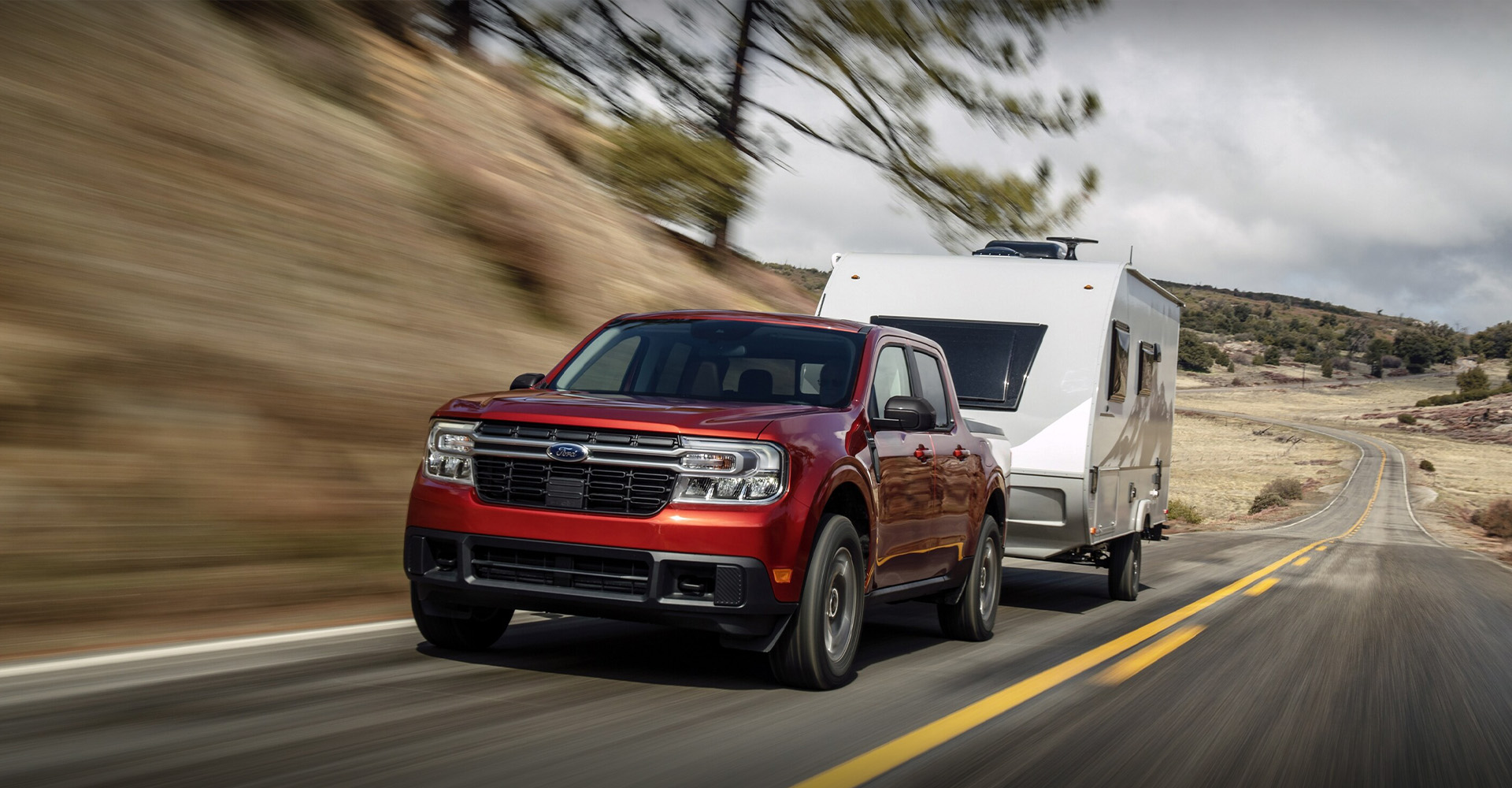
We can’t compare the Ford Maverick EcoBoost® vs. hybrid models without taking a glance at their specifications. Let’s see how these two exceptional engines measure up! The Ford Maverick EcoBoost® packs a punch with its 2.0L turbocharged engine, generating 250 horsepower and 277 lb.-ft. of torque. On the other hand, the Ford Maverick hybrid configuration offers a 2.5L Atkinson cycle engine combined with an electric motor, which is the available hybrid powertrain for the Ford Maverick, delivering a combined 191 horsepower for efficient performance.
Ford Maverick EcoBoost® vs. Hybrid MPG: Performance and Fuel Economy
Fuel economy is a key differentiator between the Ford Maverick’s EcoBoost® vs. hybrid models. Let’s take a look at how the two compare:
Ford Maverick EcoBoost® Models: As mentioned before, the 2.0L EcoBoost® engine is the standard engine for the Ford Maverick. The Ford Maverick XL and XLT trims equipped with the 2.0L EcoBoost® and FWD, is a great option for drivers seeking a balance of power and efficiency. With an EPA-estimated 23 city/30 highway/26 combined MPG, you can expect to travel an average of 429 miles on a single tank. This translates to potential annual fuel cost savings of around $1,950 compared to less efficient vehicles. The Ford Maverick EcoBoost® offers a practical and cost-effective solution for your daily commute and weekend adventures.
Ford Maverick Hybrid Models: When comparing the Ford Maverick EcoBoost® vs. hybrid, you’ll notice that the Ford Maverick Hybrid also has a great MPG. The Ford Maverick XLT 2.5L Hybrid with FWD is a standout when it comes to fuel efficiency. Boasting an impressive EPA-estimated 42 city/33 highway/37 combined MPG, this hybrid powerhouse offers an extended range of approximately 511 miles on a single tank. By choosing the Ford Maverick hybrid model, you’re not only reducing your carbon footprint but also saving money, with an estimated annual fuel cost of just $1,350, leading to significant savings in fuel costs over time. Ultimately, the choice comes down to your personal preference and your daily commuting habits.
Choosing the Right Engine: Ford EcoBoost® vs. Hybrid Engine
Deciding between the Ford Maverick’s EcoBoost® vs. hybrid engines is a crucial step in finding your perfect truck. If your daily routine primarily involves commuting and running errands, the Hybrid engine might be the ideal choice. Renowned for its exceptional fuel economy, this option seamlessly blends electric and gas power for a smooth, efficient ride. Front-wheel drive models equipped with a hybrid engine offer optimal performance for everyday driving conditions.
However, if you anticipate towing, hauling, or simply desire a more spirited driving experience, the EcoBoost® engine delivers the power you need. Its turbocharged technology provides impressive horsepower and torque, making it ideal for tasks that require a loaded cargo bed. For added traction and capability, consider an all-wheel drive Ford Maverick equipped with the EcoBoost® engine or the Ford Maverick Lariat for advanced features and performance. Ultimately, the best engine for you depends on your specific needs and driving habits.

Ford Maverick EcoBoost® vs. Hybrid AWD
AWD is another factor to consider when comparing the Ford Maverick EcoBoost® vs. hybrid models. If you’re seeking an AWD option, it is important to note that it is only available on EcoBoost® models. The Ford Maverick EcoBoost® with AWD can tow up to a maximum of 4,000 lbs. when paired with the available Max Tow Package and can be equipped with a spray-in bedliner for added durability. The hybrid engine is only available with a FWD configuration and an automatic variable transmission (CVT). The 2.5L hybrid engine’s max payload allows up to 2,000 lbs. on FWD models.
Make Your Move
Choosing between the Ford Maverick EcoBoost® vs. hybrid models ultimately depends on your individual driving needs and preferences. If fuel efficiency and a quieter, smoother ride are top priorities, the hybrid configuration is an excellent choice. The Ford Maverick Hybrid’s electric motor provides extra power when needed and helps in reducing overall fuel costs, making it suitable for various driving conditions. However, if you require more towing capacity, a higher payload, or simply enjoy a more spirited driving experience, the EcoBoost® model delivers the performance you crave. Its turbocharged engine offers impressive power and torque, making it a capable choice for those with more demanding lifestyles. No matter which engine you select, the Ford Maverick offers a versatile and stylish package. Its compact size and truck bed make it perfect for both work and play. So, whether you’re a city dweller looking to save on fuel or an outdoor enthusiast needing a capable workhorse, the Ford Maverick has you covered. Visit Preston Ford of Aberdeen today to test drive both models and find the perfect Ford Maverick to fit your lifestyle!
Ford Escape Hybrid Guide

The Ford Escape Hybrid: Your Ticket to Savings and Sustainability
There are not many crossover SUVs that are Built Ford Tough® and offer an unbeatable electric and gas powertrain combo. An equal balance of efficiency, style, and strength all add up to give you the Ford Escape Hybrid and the Ford Escape Plug-In Hybrid SUV. When discussing the pros of the Ford Escape Hybrid, there is a lot of information we need to squeeze in, so follow along as we address each of your pressing questions, concerns, and curiosities about this innovative Ford model. Then, head to Preston Ford of Aberdeen to explore our lineup of the Ford Escape Hybrids!

The Escape at a Glance
The Ford Escape Hybrid and Plug-In Hybrid are more than just mere SUVs; they are a statement of efficiency, innovation, and environmental consciousness. Following the discontinuation of the Ford EcoSport, the Ford Escape Hybrid is Ford’s smallest SUV. With its sleek design, spacious interior, and impressive fuel economy, the Ford Escape Hybrid offers the perfect blend of style, practicality, and eco-friendliness. Whether you’re commuting to work, embarking on a weekend adventure, or simply looking to reduce your carbon footprint, the Ford Escape Hybrid is the ideal choice. But what sets the Ford Escape Hybrid apart? Let’s dive deeper into what makes this vehicle so exceptional and answer the most commonly asked questions.

How Long Does a Ford Escape Hybrid Battery Last?
One of the most common questions we get about hybrid vehicles is battery life. The Ford Escape Hybrid utilizes a sophisticated battery system comprising a high-voltage (HV) battery pack and a traditional 12-volt battery. While the HV battery is a crucial component, it’s important to understand that the overall health of the hybrid system depends on the interplay between both batteries.
Several factors can impact the longevity of your Ford Escape Hybrid battery, including driving habits, climate conditions, and overall vehicle maintenance. Common signs of potential battery issues include decreased fuel efficiency, reduced hybrid mode effectiveness, illuminated battery warning lights, sluggish acceleration, and a weak 12-volt battery.
To maximize the lifespan of your Ford Escape Hybrid battery, regular maintenance is key. This includes routine checks of the 12-volt battery, avoiding excessive battery discharge, and keeping your vehicle’s software updated. By following these tips, you can enjoy the benefits of your Ford Escape Hybrid for years to come.
How Does the Ford Escape Plug-in Hybrid Work?
If you’re looking to maximize your fuel savings and reduce your environmental impact even further, the Ford Escape Plug-in Hybrid might be the perfect choice for you. This advanced vehicle combines a traditional hybrid system with a larger battery pack that can be plugged in to charge. By plugging in your Ford Escape Plug-in Hybrid, you can operate the vehicle on pure electric power for a certain distance, significantly reducing your reliance on gasoline. Its impressive electric range allows for substantial fuel savings and reduced emissions. Charging is convenient with the included level 1 mobile power cord that works with any standard 120V outlet. And if you’re in a hurry or simply forget to plug in, no worries — it seamlessly transitions to hybrid mode, using both electric and gasoline power for uninterrupted driving.

How to Charge a Ford Escape Hybrid Battery
Unlike its plug-in hybrid counterpart, the Ford Escape Hybrid doesn’t require an external power source. Instead, it cleverly regenerates energy through braking. Every time you slow down, the vehicle captures that kinetic energy and converts it into electricity, topping off the hybrid battery. It’s like having a built-in charger that works while you drive! But that’s not all. The gas engine also helps keep the battery topped up. It’s like a little power buddy, always there to give the battery a boost when it needs it. So, basically, you don’t have to worry about plugging your Ford Escape Hybrid in like an electric car. It handles the charging on its own!
Ford Escape Hybrid Tax Credit
Did you know that owning a hybrid or plug-in hybrid vehicle can also lead to significant financial savings through tax credits? You heard us right! The federal government offers tax credits for eligible hybrid and electric vehicles. Ideal for daily commutes and longer trips alike, the Ford Escape PHEV is eligible for a federal tax credit. For 2022 and 2023 models priced under $80,000, you could potentially save up to $3,750. This makes the Ford Escape PHEV an even more attractive option for environmentally conscious drivers seeking a versatile and cost-effective SUV. Remember, it’s essential to check with the IRS for the most up-to-date information on Federal EV and hybrid tax credits and their eligibility requirements. If you have any questions, you can always contact us for more information!
Your Escape Awaits
The Ford Escape Hybrid is more than just a car; it’s a smart choice for today’s driver. With its impressive fuel economy, advanced technology, and comfortable interior, it’s perfect for daily commutes and weekend adventures. Plus, the peace of mind knowing you’re helping the environment is an added bonus. Ready to experience the future of driving? Visit Preston Ford of Aberdeen today for a test drive!
Hybrid vs. EV: Which Is Better For You?

Hybrid vs Electric Cars: Which is Right for You and Your Wallet?
At Preston Ford of Aberdeen, we recognize the importance of finding a vehicle that fits not only your budget, but your lifestyle. With the growing popularity of fully electric vehicles and hybrid options, deciding which one is right for you can be a challenge, especially when Ford has so many great options. Our helpful guide will break down the key differences between hybrid vs. electric cars, helping you navigate this exciting new landscape and find the perfect fuel-efficient car for your needs. Follow along to learn more about the difference between EVs and hybrids, and head to our dealership to explore our hybrid and electric vehicle lineup!

What Is the Difference Between Hybrid and Electric Cars?
Hybrid vs. electric cars both offer better fuel efficiency than gasoline-powered options. EVS rely solely on electricity for power, needing to be plugged in and offering limited range. Hybrids combine electric motors with an internal combustion engine, resulting in lower emissions and the ability to refuel at gas stations.
Understanding Electric Vehicles
Before we compare hybrids vs. electric cars, let’s take a closer look at each type of vehicle. Electric vehicles, or EVs, are powered by electric power stored in onboard batteries. This eliminates the need for gasoline and significantly reduces tailpipe emissions. With a single charge, some EVs can now travel over 300 miles, making them a compelling option for everyday driving. EVs are also known for their quiet operation and smooth acceleration, offering a more enjoyable driving experience. Unlike gas-powered vehicles that rely on internal combustion engines (ICE), EVs use electric motors for propulsion. This translates to instant torque, providing a quicker and more receptive driving experience compared to traditional cars. Additionally, the absence of an engine means EVs operate much quieter, creating a more peaceful driving environment.
Thinking about making the switch to an EV? Read our previous blog for all you need to know!
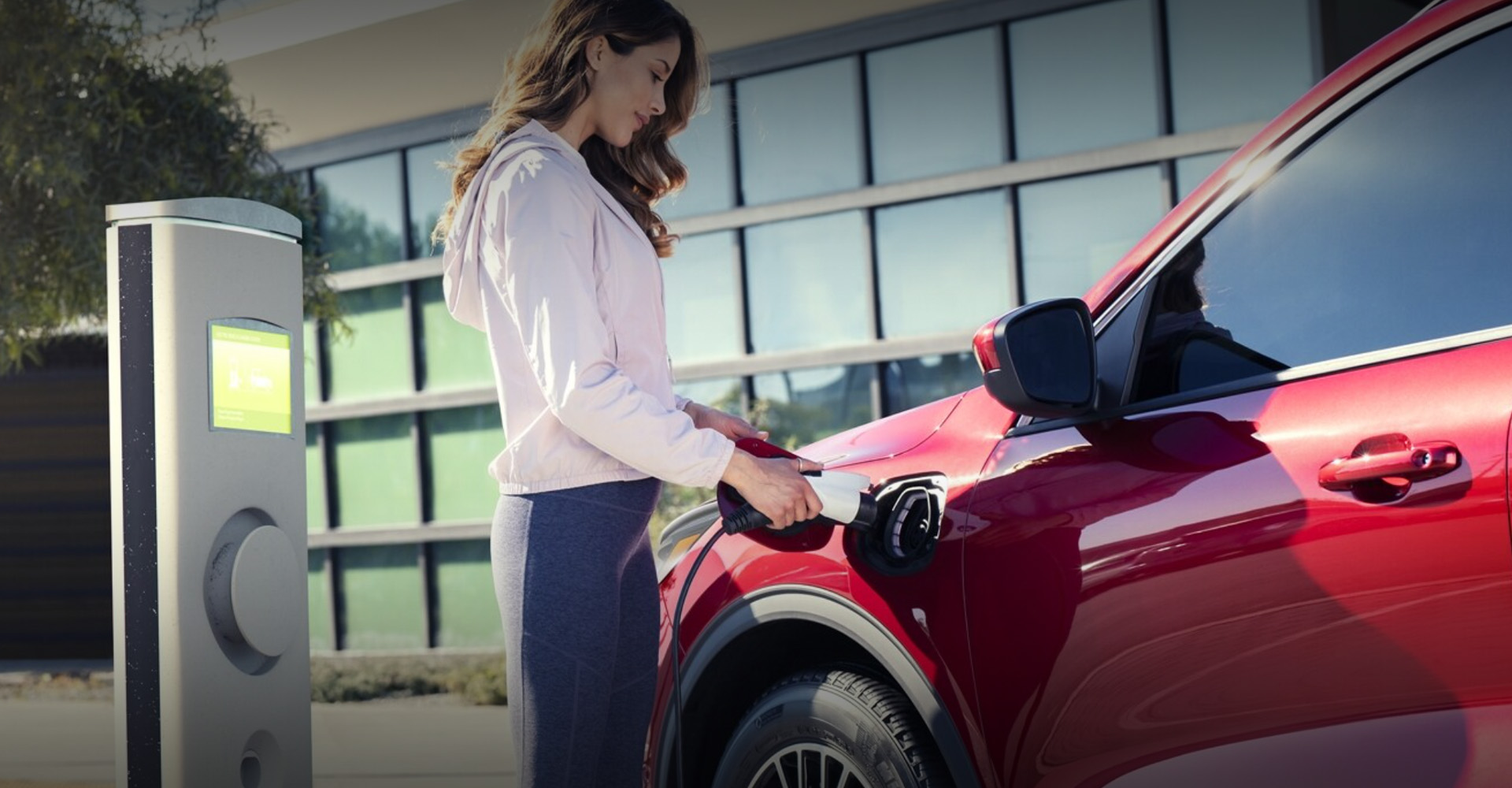
Understanding Hybrid Cars
When looking at hybrids vs. electric cars, hybrid models combine the power of an electric motor with a traditional gas engine. This allows you to switch between electric and gas power depending on driving conditions. The electric motor assists the gasoline engine, leading to enhanced fuel efficiency and lower emissions compared to traditional gas-powered vehicles. Hybrid cars have a separate battery pack that gets charged by the gasoline engine and, through regenerative braking, a system that captures energy when the car slows down.
Environmental Impact and Fuel Efficiency
When it comes to the environmental impact of hybrid and electric vehicles, EVs are the clear winner. They produce zero tailpipe emissions, making them a significant contributor to cleaner air. Hybrids, while offering lower emissions than gas-powered cars, still produce some emissions from the gasoline engine. Fuel efficiency is another area where EVs shine. Electric vehicles boast an average efficiency of 95%, compared to the 20% efficiency of traditional gasoline engines. This translates to significant fuel savings, especially with rising gas prices. Hybrids offer better fuel economy than gas-powered cars, but they still lag behind EVs in terms of efficiency.
Pros and Cons of Hybrid and Electric Cars
Now that we understand the basics of each type of car let’s delve into their specific advantages and disadvantages.
Hybrid Car Advantages:
- Lower emissions and higher fuel efficiency than gas-powered cars. Hybrid vehicles can switch between gas and electricity, offering convenience and significant environmental benefits.
- No range limitations – hybrids can travel several hundred miles before refueling.
- Generally more affordable to purchase than EVs.
Hybrid Car Disadvantages:
- Higher upfront cost.
- Requires oil changes and air filter replacements.
- May not be suitable for long road trips without access to gas stations.
Electric Vehicle Advantages:
- Zero tailpipe emissions – ideal for eco-conscious drivers, as electric power eliminates the need for gasoline.
- Quieter and smoother driving experience compared to gas-powered cars.
- Faster acceleration and a more responsive ride.
Electric Vehicle Disadvantages:
- Limited range and dependence on charging stations for long trips, especially for fully electric vehicles.
- Higher upfront purchase cost compared to hybrids.
- May not be suitable for long road trips without readily available charging stations.
Ownership and Maintenance Costs: Are Hybrid Cars More Expensive Than Electric Cars?
While both hybrids vs. electric cars offer significant fuel savings, there are some differences in ownership and maintenance costs.
Insurance and Depreciation: Both hybrid vs. electric cars tend to have slightly higher insurance premiums than a gas-powered vehicle. However, electric vehicles have a higher depreciation rate than hybrids.
Battery Replacement and Maintenance: Electric vehicles require less maintenance than gas-powered cars, as they don’t require oil changes or spark plug replacements. However, battery replacement in an EV can be more expensive than routine maintenance on a hybrid.
Choosing the Right Car for You
The decision between a hybrid vs. an electric car ultimately depends on your individual needs and driving habits. Consider your daily commute distance and how often you take long road trips. If you have access to charging stations at home or work and primarily drive shorter distances, an EV may be ideal. However, if you frequently make long road trips or lack access to charging stations, a hybrid vehicle might be a better fit.
Go Green
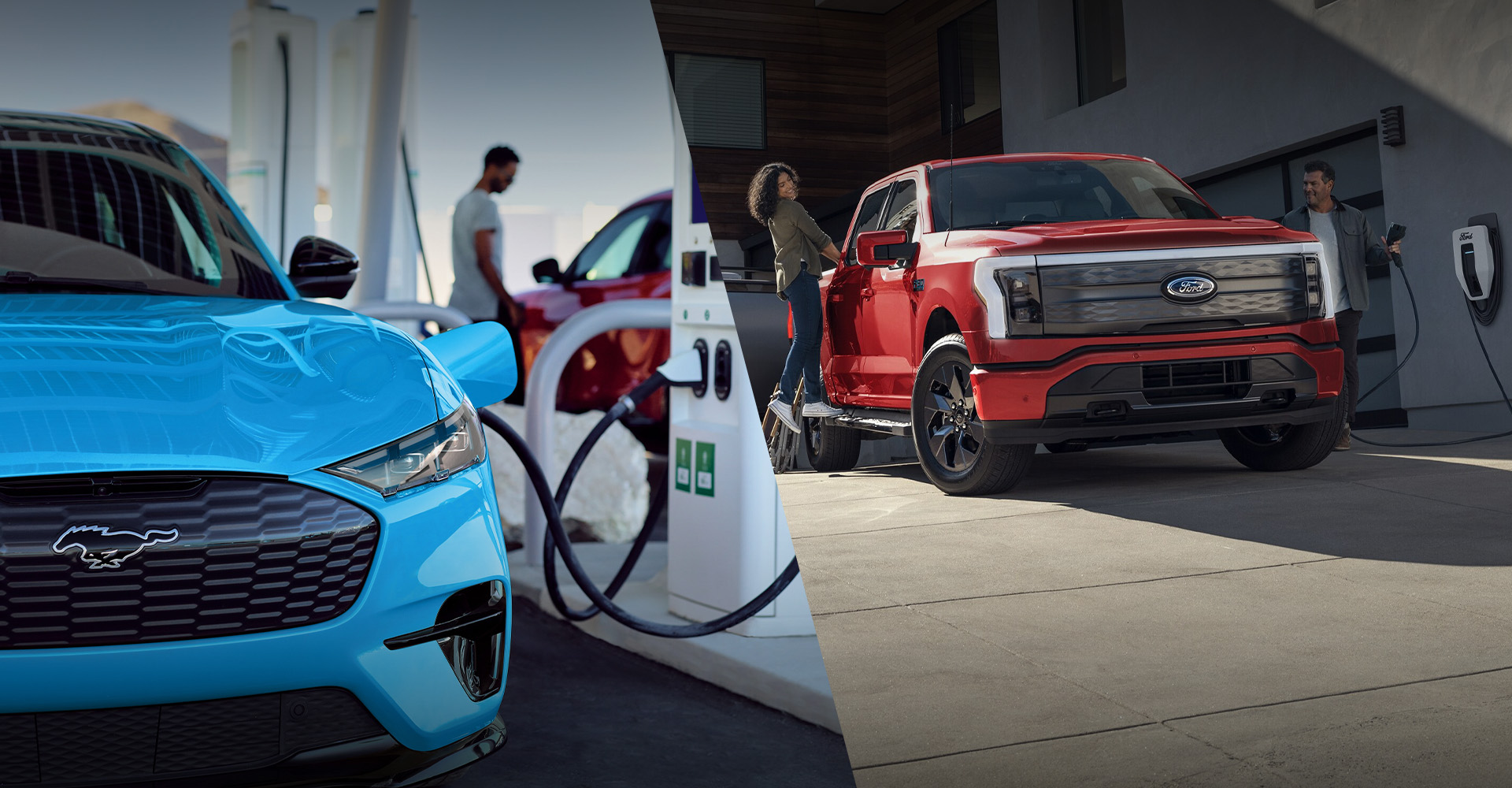
Still conflicted on a hybrid vs. an electric car? Here at Preston Ford of Aberdeen, we offer a variety of exciting hybrid and fully electric vehicles to suit your needs. Our hybrid lineup includes the fuel-efficient Ford Escape Hybrid and the versatile Ford Maverick. Looking for a fully electric option? Check out the Ford Mustang Mach-E, an SUV with thrilling performance and a stunning design, or the highly capable Ford F-150 Lightning. Hop over to our dealership to explore your greener options today!
Connect with us

